
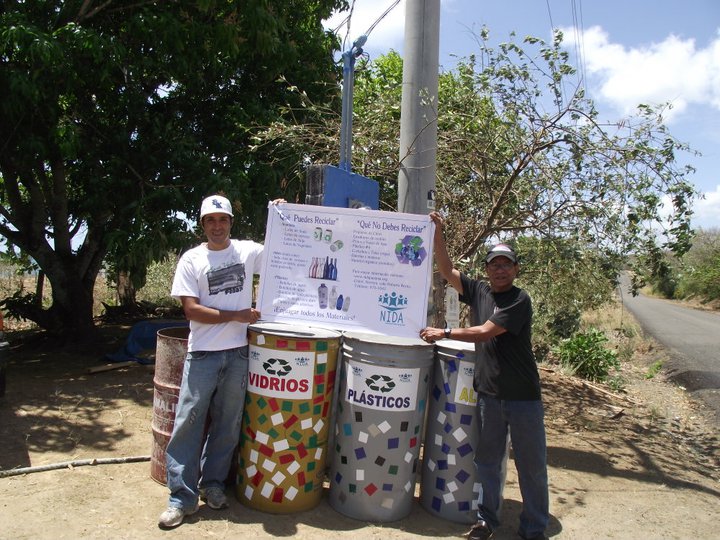
In Panama, solid waste (garbage) has become a significant problem due to a lack of awareness among the population, along with reluctance and disorderly management. Over time, this has caused consequences such as a polluted environment (water, air, sky, and ecosystem degradation) and risks to public health (diseases and emerging epidemics, respiratory problems, etc.).
Similarly, environmental groups and individuals committed to the welfare and improvement of the quality of life in our surroundings are using strategies such as «Recycling.”
This practice involves reusing discarded materials that were and still are apt to develop the same or prefabricated products, reducing waste volumes and waste of materials of significant objects.
The NIDA Foundation (a foundation dedicated to community development and projects for the sustainable region most in need in Azuero, Panama) is concerned about the welfare of the environment and the growth of the planned strategies to offer environmental lessons. These are directed to governmental institutions (schools) and organized community groups to create awareness about Earth’s problems with the accumulation of solid waste.
Recycling also saves resources, lengthens the life of the material (even with different uses), and saves energy. It avoids deforestation and reduces 80% of the waste produced when it becomes trash. At the same time, one can decrease the need to burn trash, bringing healthy benefits to the community.
The Azuero peninsula is the largest peninsula of the Republic of Panama and the southernmost tip of Central America. The Pacific Ocean surrounds it to the south and west, and the Gulf of Panama to the east. It includes all the provinces of Herrera and Los Santos, as well as the southeastern part of the province of Veraguas (Mariato) in the Republic of Panama.
Azuero has many natural areas and ecosystems of high environmental value and uniqueness. Its importance and the need to harmonize conservation values with economic exploitation have promoted the protection and management of landscapes and ecosystems representative of Azuero’s territory. But having this great wealth has not escaped the mismanagement of waste.
They are increasingly corroding the wealth that this region has; therefore, NIDA has implemented different types of programs and activities to boost recycling in this region:
- Generate awareness about recycling in schools and colleges in the Azuero region, incorporating students into the practice of recycling.
- Create incentive programs for community recycling so they can start practicing.
Communities that started their project!
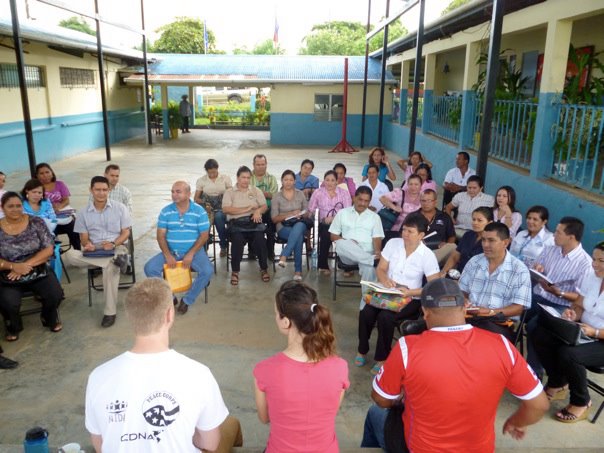
Cambutal: a community located south of the peninsula of Azuero, a municipality in the district of Tonosi. The capital community has approximately 700 to 750 people engaged in farming. It has great tourist attractions from its beaches, but Cambutal has not escaped solid waste from the community, which still practices the mismanagement of burning trash. They do not have adequate management by the City Hall.
The program:
- Provide education on solid waste management (recycling) in communities and schools.
- Create a community group that would be in charge of the program and previously trained.
- The collection would require the community volunteers to transport and store it in Las Tablas. Representative Juan Trejos will be in charge.
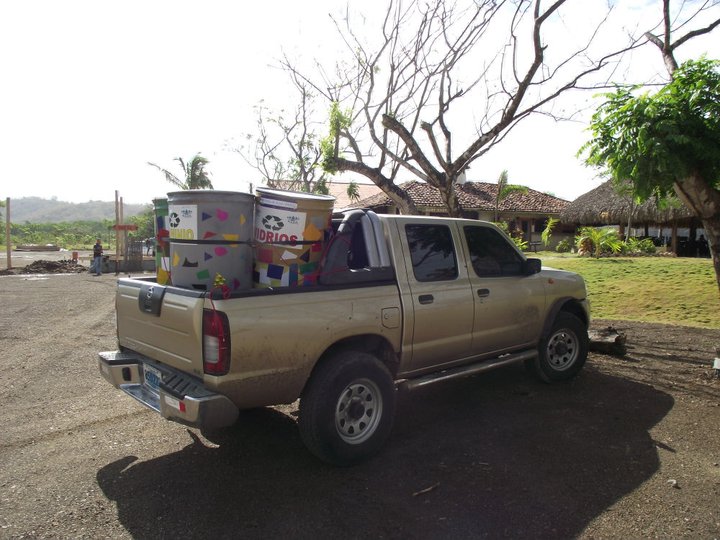
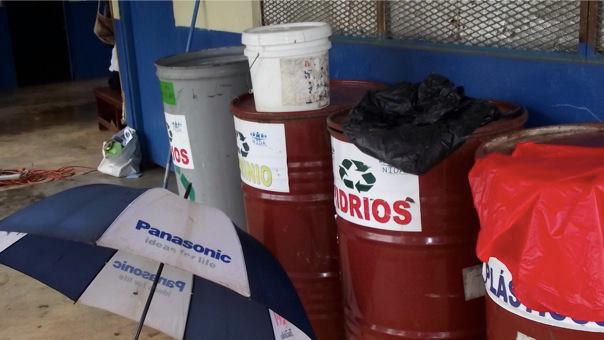
- Twelve tanks were donated and placed in 4 strategic locations where the community could deposit recyclable materials such as aluminum and tetra packs.
Pedasí: district located southeast of the Azuero Peninsula belonging to the province of Los Santos, one of the most touristic places of the peninsula. The program was held in conjunction with volunteers and the Ecological Project of Azuero, an ONG that focuses on the region’s environmental conservation.
The program
- Provide education on solid waste management (recycling) in communities and schools.
- The youth movement “Pedasí Green” runs the program.
- Youth Movement Pedasí Green, in collaboration with community volunteers, will collect the items and store them in a facility in Las Tablas.
- Fourteen tanks were donated and placed in 7 locations where the community could deposit recyclable materials such as aluminum, plastic, paper, newspaper, and cardboard.
Program Recyclable material collection Azuero’s coasts:
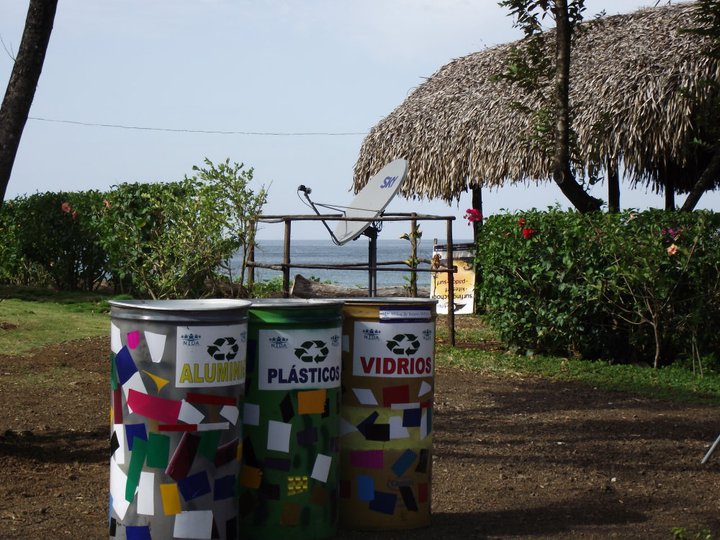
We have implemented a path of recyclable materials collection along the coast of Azuero, placing tanks at strategic points collecting plastic, aluminum, and glass as shown in the following table:
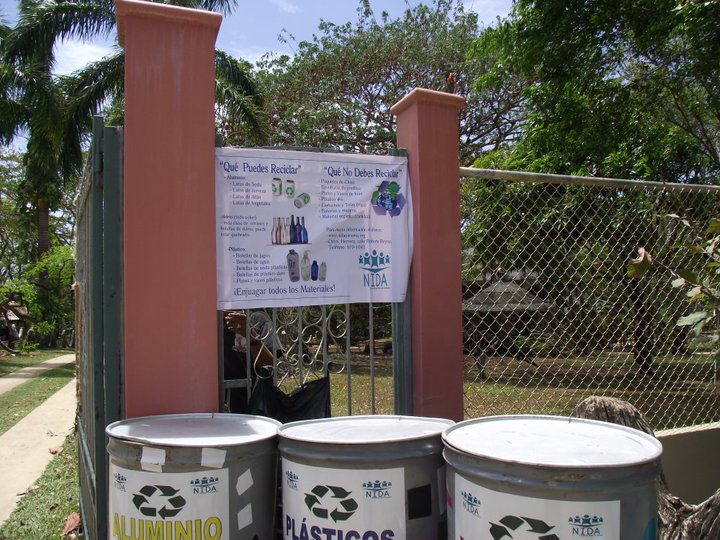
| Place | Tanks placed |
|---|---|
| Corregimiento de Cañas | 3 tanks |
| Eco Venao | 6 tanks |
| El Sitio Venao | 6 tanks |
| Hostal La Choza | 3 tanks |
| Hotel La Sirena | 3 tanks |
| Bar El Ciruelo | 3 tanks |
| Total sites:6 | 24 tanks |
Educational Centers 2011
| Center | Location | total students | Donation | Date |
|---|---|---|---|---|
| Evelio Dolores School | Llano Bonito, Chitré | 478 | 3 tanks | 8/15/2011 |
| Presidente Porras school | Las Tablas, Los Santos | 610 | 3 tanks | 7/25/2011 |
| Claudia Vásquez school | Las Tablas, Los Santos | 706 | 3 tanks | 7/18/2011 |
| Jardín de Infancia | Monagrillo, Chitré | 34 | 3 tanks | 7/5/2011 |
| María Auxiliadora | Chitré, Herrera | 41 | 3 tanks | 6/15/2011 |
| El Calabazo school | Macaracas, Los Santos | 16 | 3 tanks | 6/9/2011 |
| Juan T. Busto school | Chitré, Herrera | 820 | 3 tanks | 5/23-26/2011 |
| Hipólito P. Tello School | Llano Bonito, Chitré | 68 | 3 tanks | 5/17/2011 |
| Soyuz highschool | Chitré, Herrera | 531 | 3 tanks | 5/9-13/2011 |
| Plinio Moscoso elementary | Pedasí, Los Santos | 250 | 3 tanks | 3/21-24/2011 |
* This is an updated list of the centers visited during 2011
Other activities in which we have promoted recycling:
Recycling Fair commemorating World Day of Recycling, held on Tuesday, April 19, 2011. The methodology that was used for the development of the fair:
- The exhibition commemorating Earth Day was held at Union Park in downtown Chitré.
- NIDA Foundation created a program of recycling which will consist of small health lectures and training, while they will also be collecting recyclable goods such as:
- Aluminum (soda/juice cans)
- Plastic (drinks bottles, sodas or any plastic container)
- Paper (white and colors, newspapers, magazines)
- Cardboard (all types)
- Glass (bottles and jars of any color)
Other NGOs and private institutions participated in the fair, which provided lectures and workshops. Each guest brought a specific topic relating to Earth Day. Also, a few schools in the region participated in the lectures and trainings, and those who attended the event.
NIDA received a certificate of appreciation from the Mayor of Chitré, Manuel Solis, for its work in the region and for initiating the event.
Azuero Recycling Fair
45 tanks were placed in 15 sets of 3, previously distinguished (labeled with glass, plastic, aluminum), which are materials to be collected in the next 8 days within the fairgrounds.
Volunteers from the biology school help on different days and schedules to give away flyers promoting recycling and encouraging the public to deposit the goods (plastic, aluminum, glass) in the corresponding tanks.
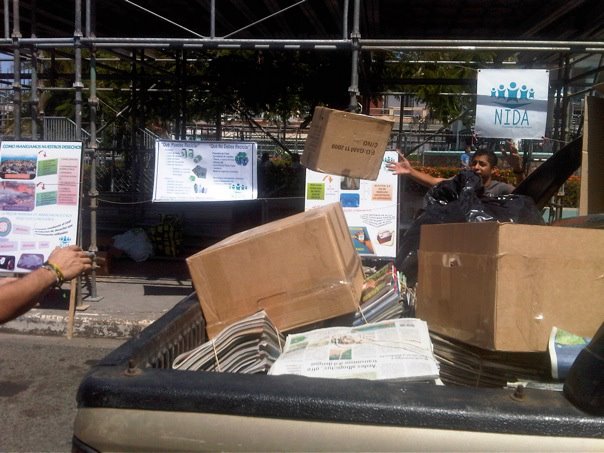
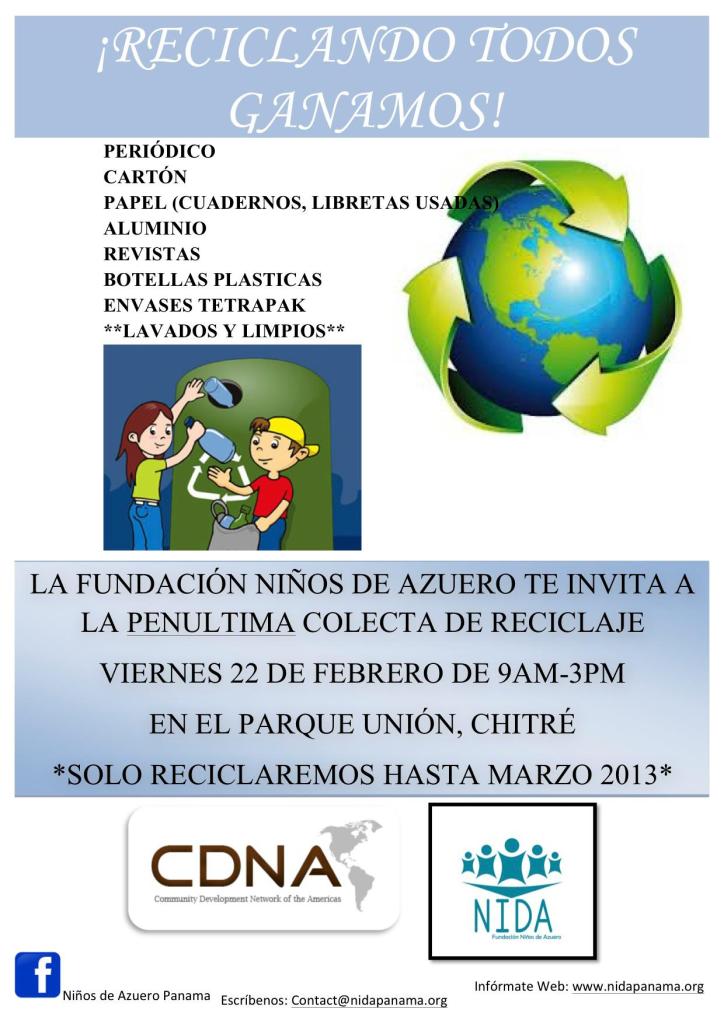
Monthly Recyclable Materials Collections in Chitre’s Union park:
These were implemented for the community to have a place to take their recyclable materials; there have been three collections on the following dates:
- the first took place on May 27, 2011
- The second took place on June 17, 2011
- And the last on August 5, 2011.
These activities have been widely accepted by the District of Chitré. More and more people join the practice of environmental conservation. The community can take their materials to NIDA’s office on Avenue José Pérez Burgos, Llano Bonito.
 COMMUNITY DEVELOPMENT NETWORK OF THE AMERICAS